Shigeo Otake: Nel mezzo del cammin
4 May 2026 – 28 June 2026
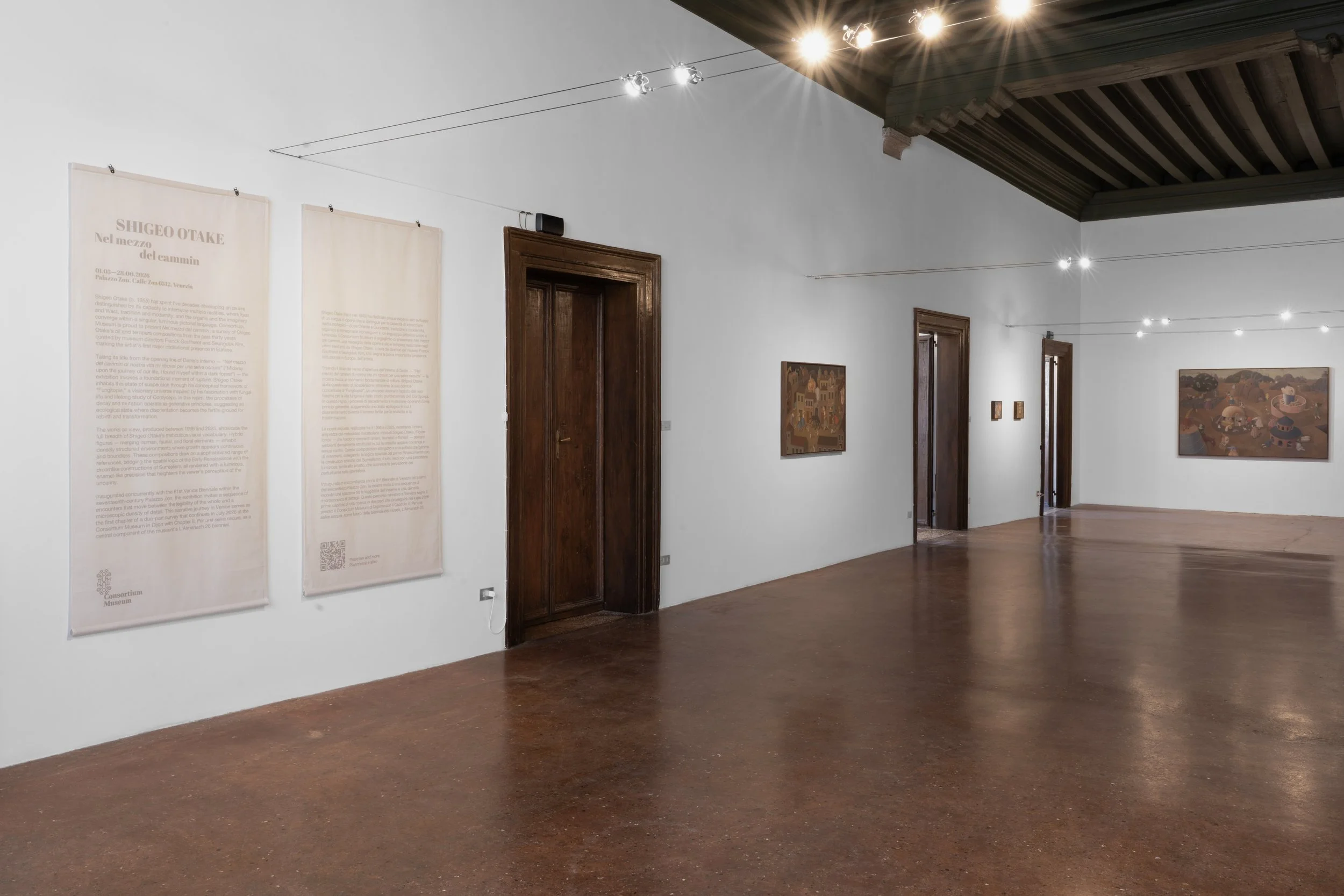
Consortium Museum | Venice
Shigeo Otake (b. 1955, Kobe, Japan) has spent five decades developing an oeuvre distinguished by its capacity to intertwine multiple realities, where East and West, tradition and modernity, and the organic and the imaginary converge within a singular, luminous pictorial language.
Consortium Museum is proud to present Nel mezzo del cammin, a survey of Shigeo Otake’s oil and tempera compositions from the past thirty years curated by museum directors Franck Gautherot and Seungduk Kim, marking the artist’s first major institutional presence in Europe.
Taking its title from the opening line of Dante’s Inferno — “Nel mezzo del cammin di nostra vita mi ritrovai per una selva oscura” (“Midway upon the journey of our life, I found myself within a dark forest”) — the exhibition invokes a foundational moment of rupture. Shigeo Otake inhabits this state of suspension through his conceptual framework of “Fungitopia,” a visionary universe inspired by his fascination with fungal life and lifelong study of Cordyceps. In this realm, the processes of decay and mutation operate as generative principles, suggesting an ecological state where disorientation becomes the fertile ground for rebirth and transformation.
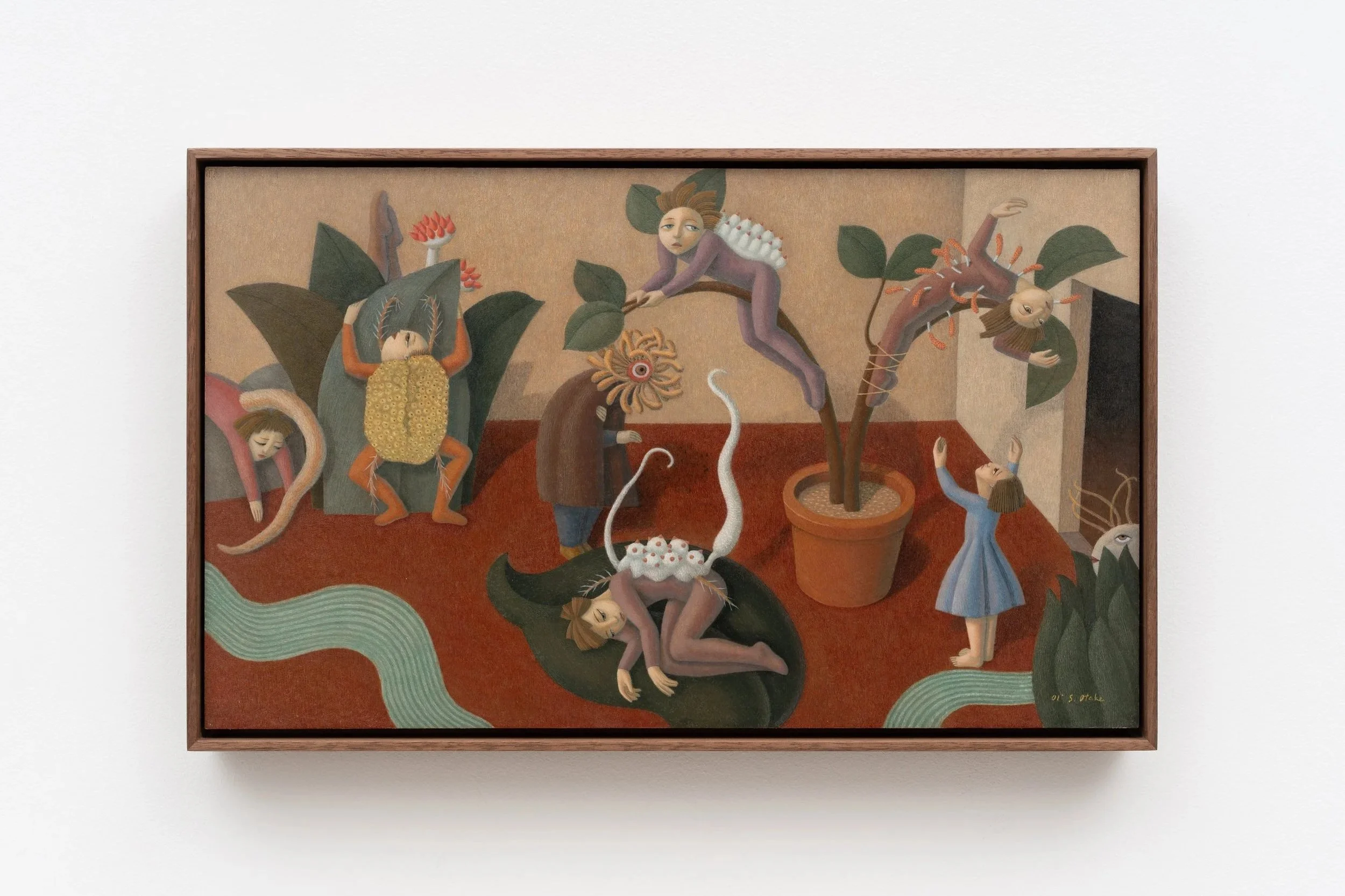
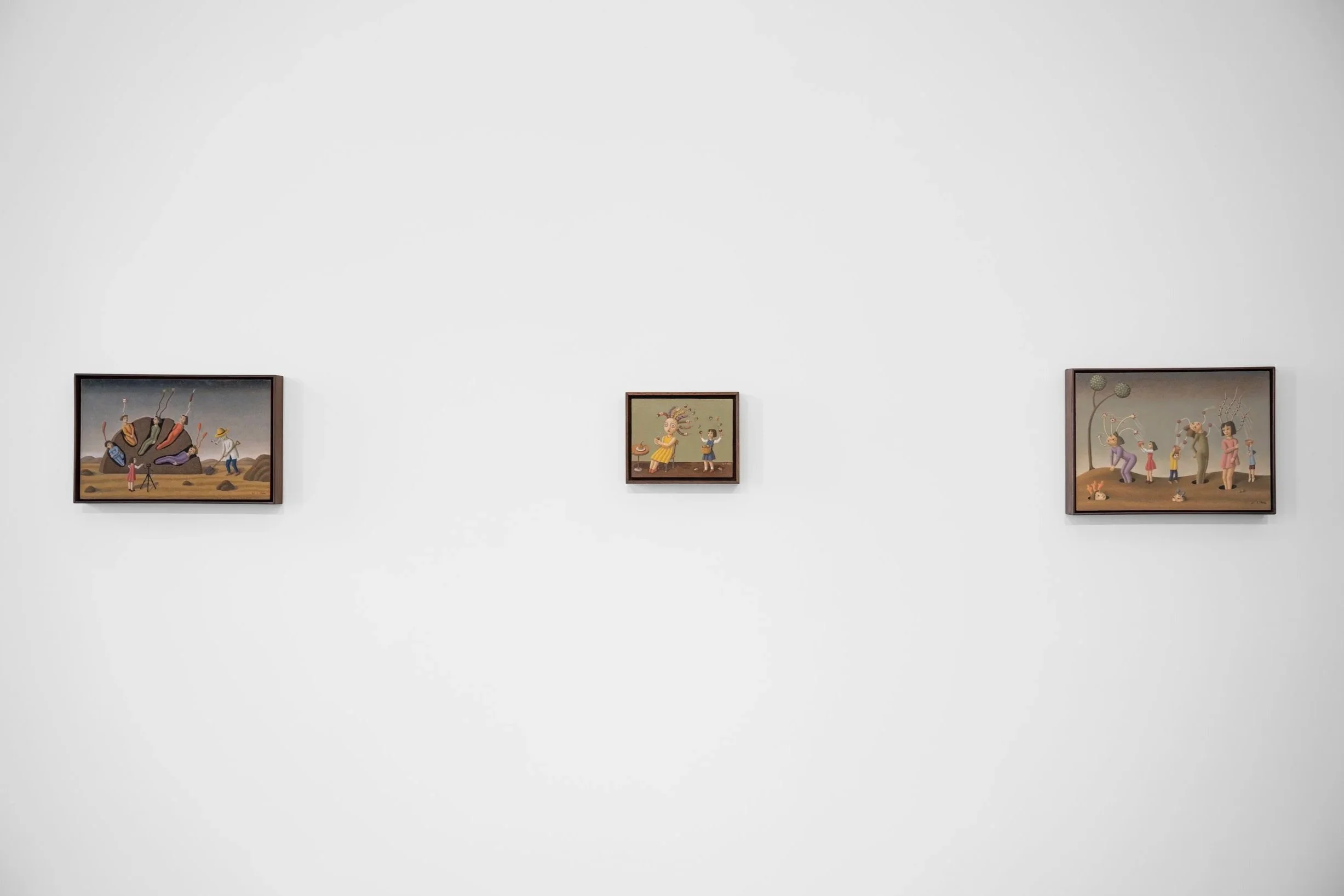
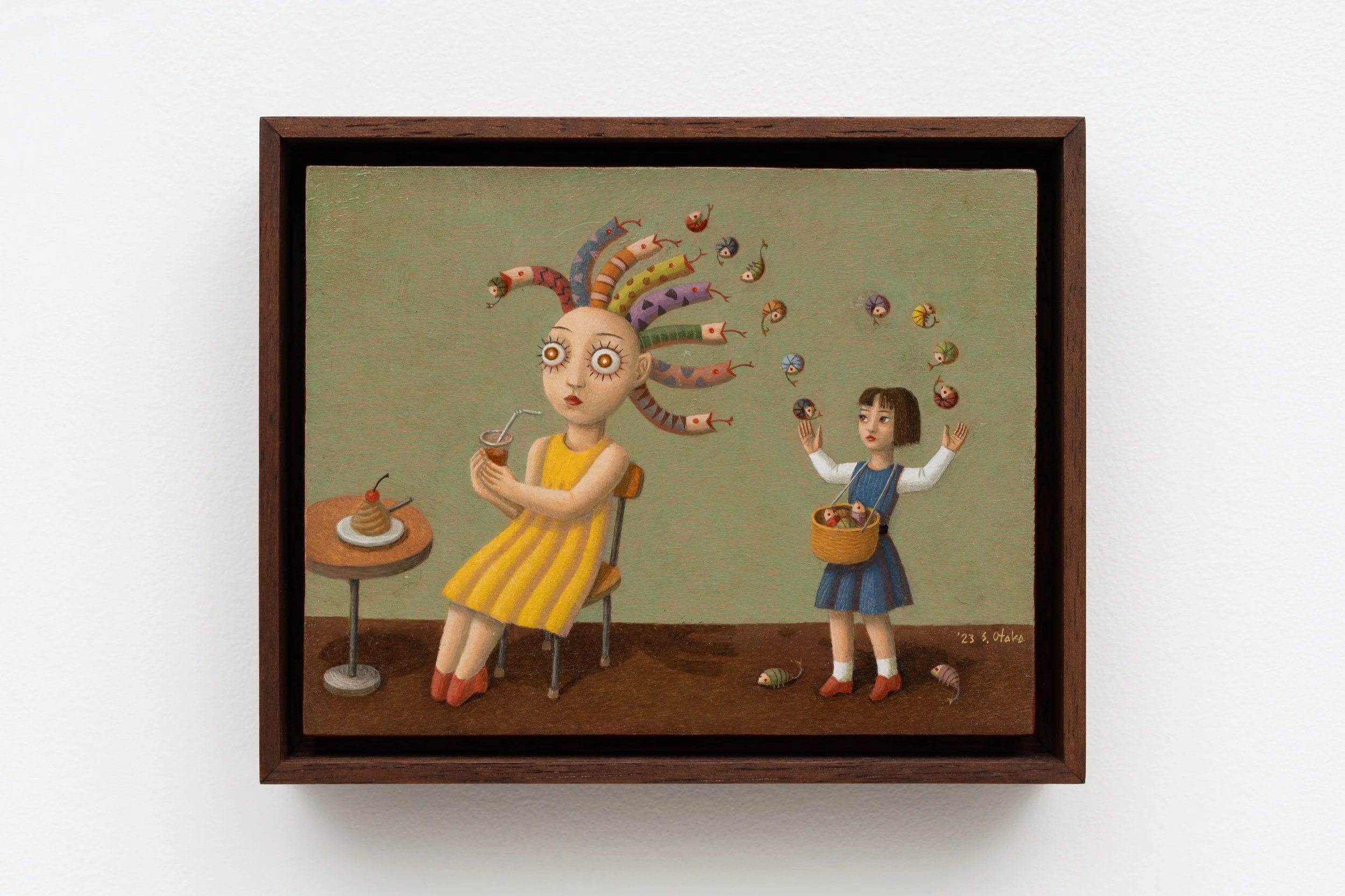
The works on view, produced between 1996 and 2025, showcase the full breadth of Shigeo Otake’s meticulous visual vocabulary. Hybrid figures—merging human, faunal, and floral elements—inhabit densely structured environments where growth appears continuous and boundless. These compositions draw on a sophisticated range of references, bridging the spatial logic of the Early Renaissance with the dreamlike constructions of Surrealism, all rendered with a luminous, enamel-like precision that heightens the viewer’s perception of the uncanny.
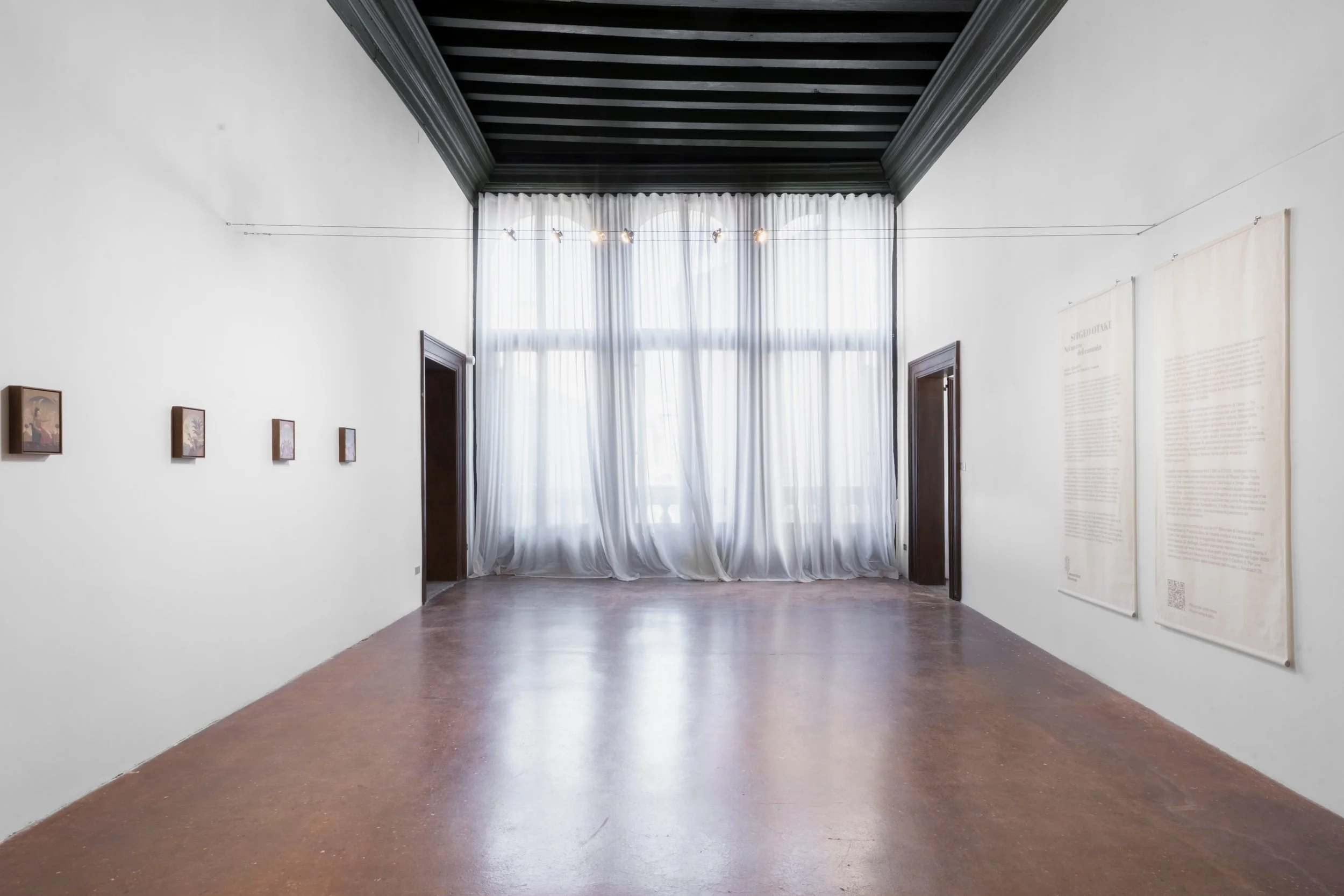
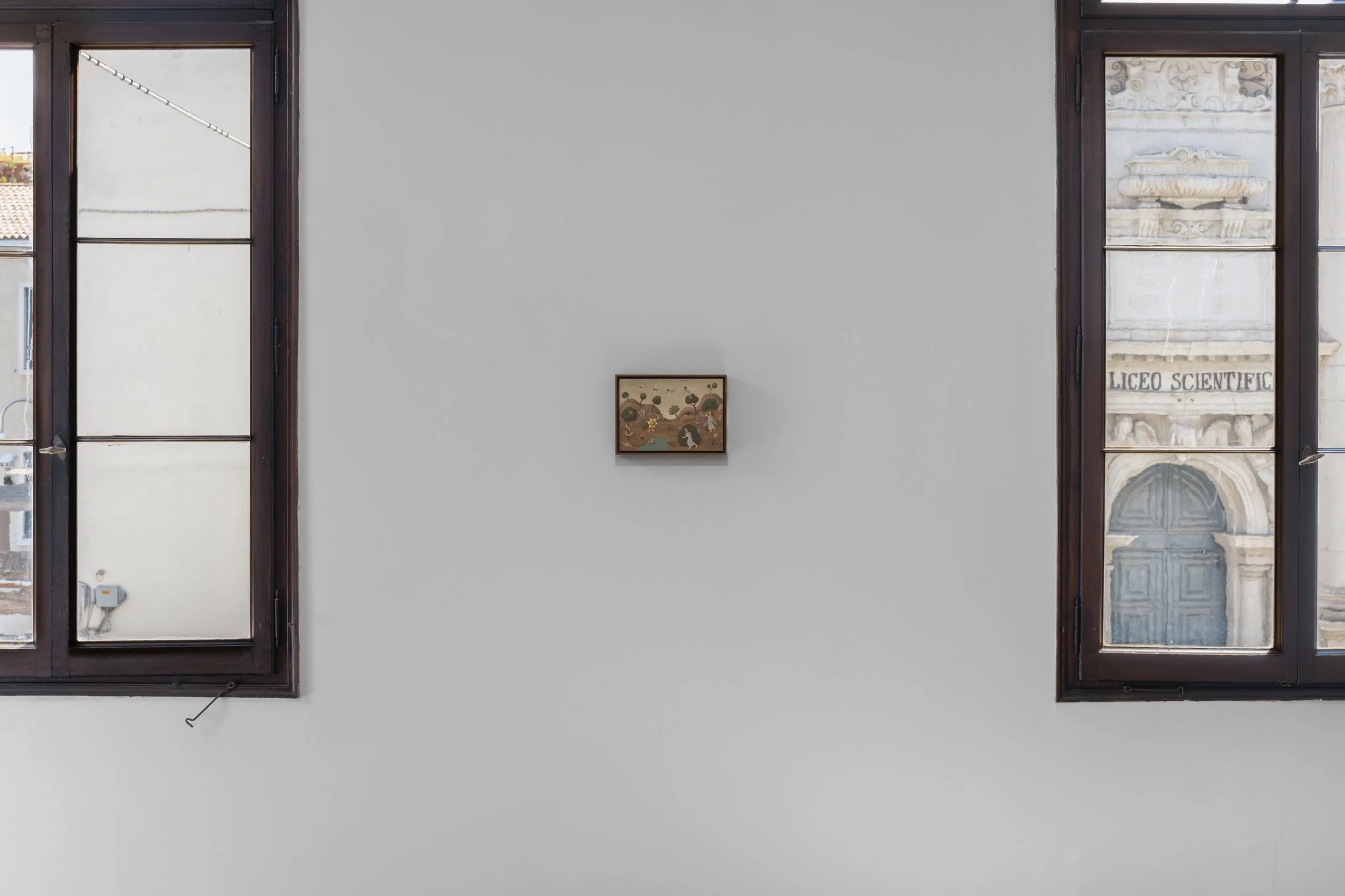
Inaugurated concurrently with the 61st Venice Biennale within the seventeenth-century Palazzo Zon, the exhibition invites a sequence of encounters that move between the legibility of the whole and a microscopic density of detail. This narrative journey in Venice serves as the first chapter of a two-part survey that continues in July 2026 at the Consortium Museum in Dijon with Chapter II, Per una selva oscura, as a central component of the museum’s Almanach 26 biennial.
Room Ⅰ. Between the Cards and the Cosmos
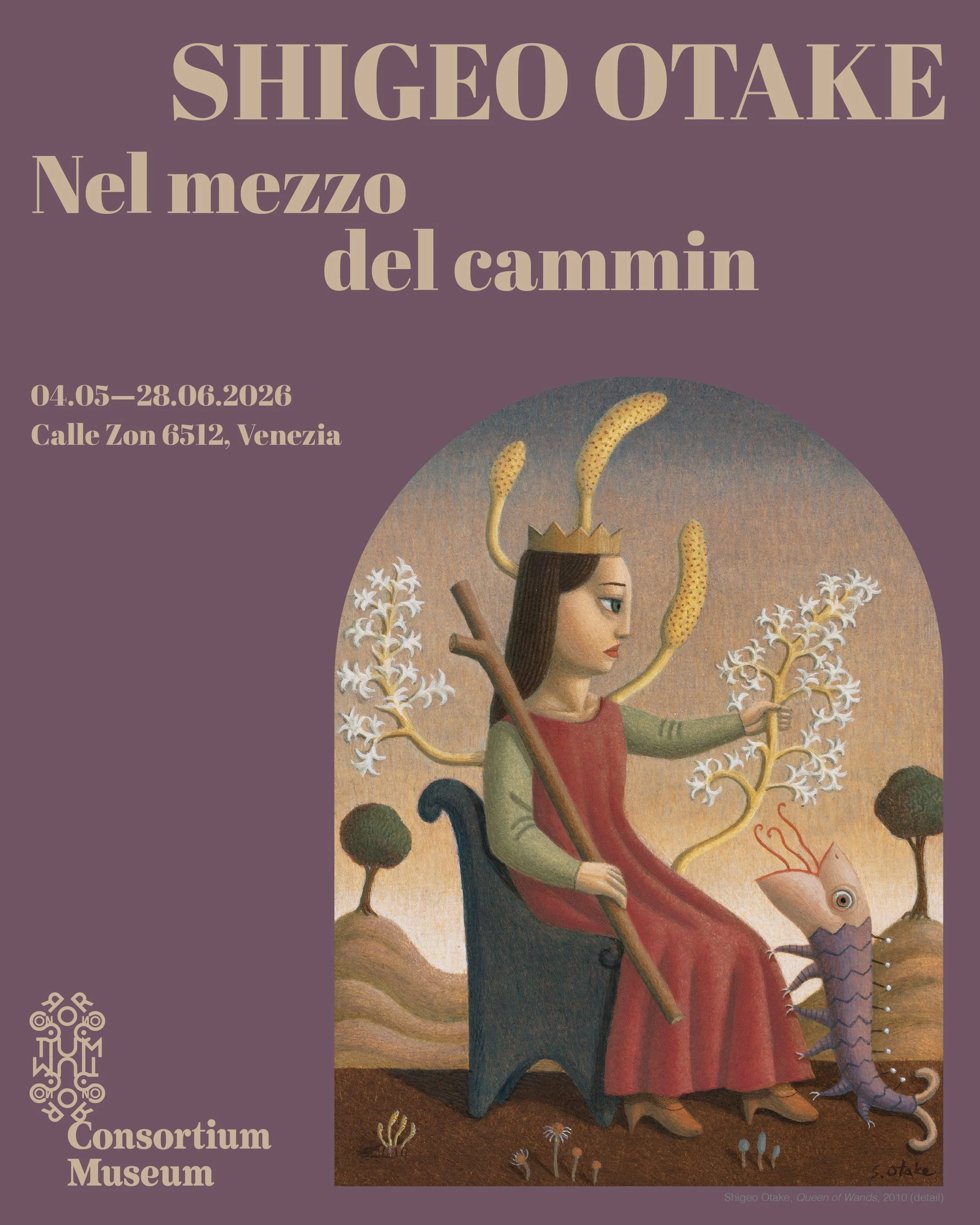
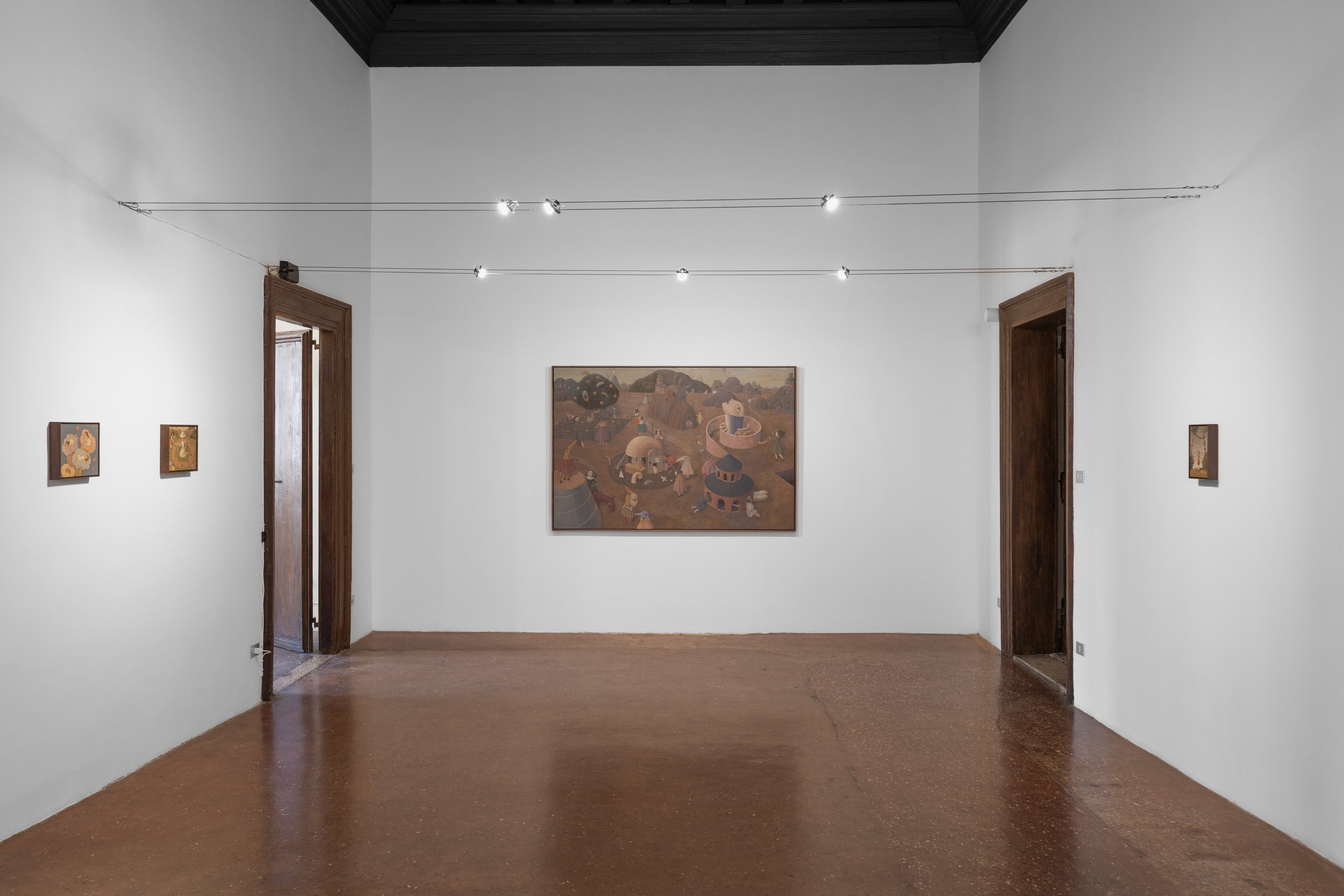
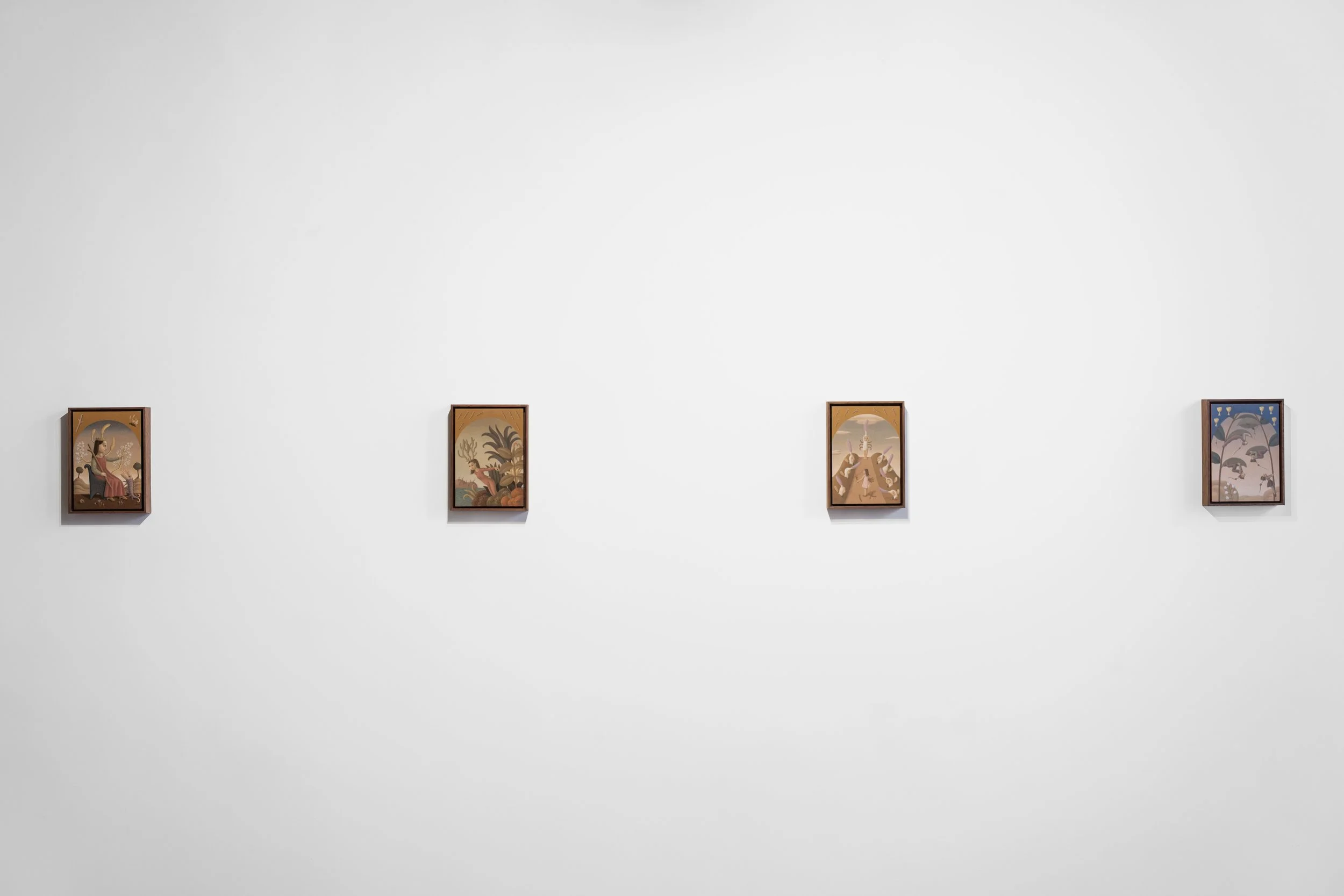
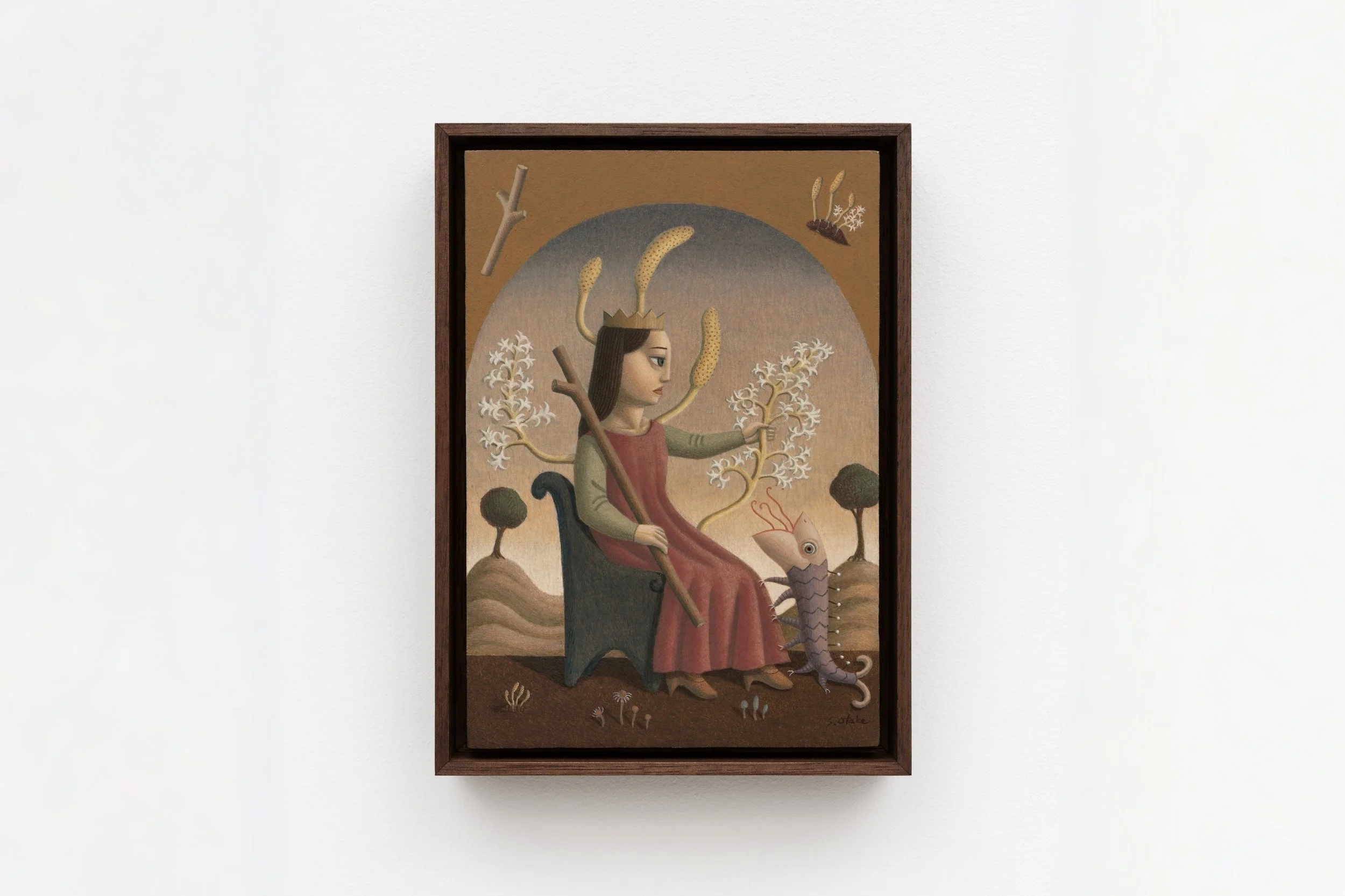
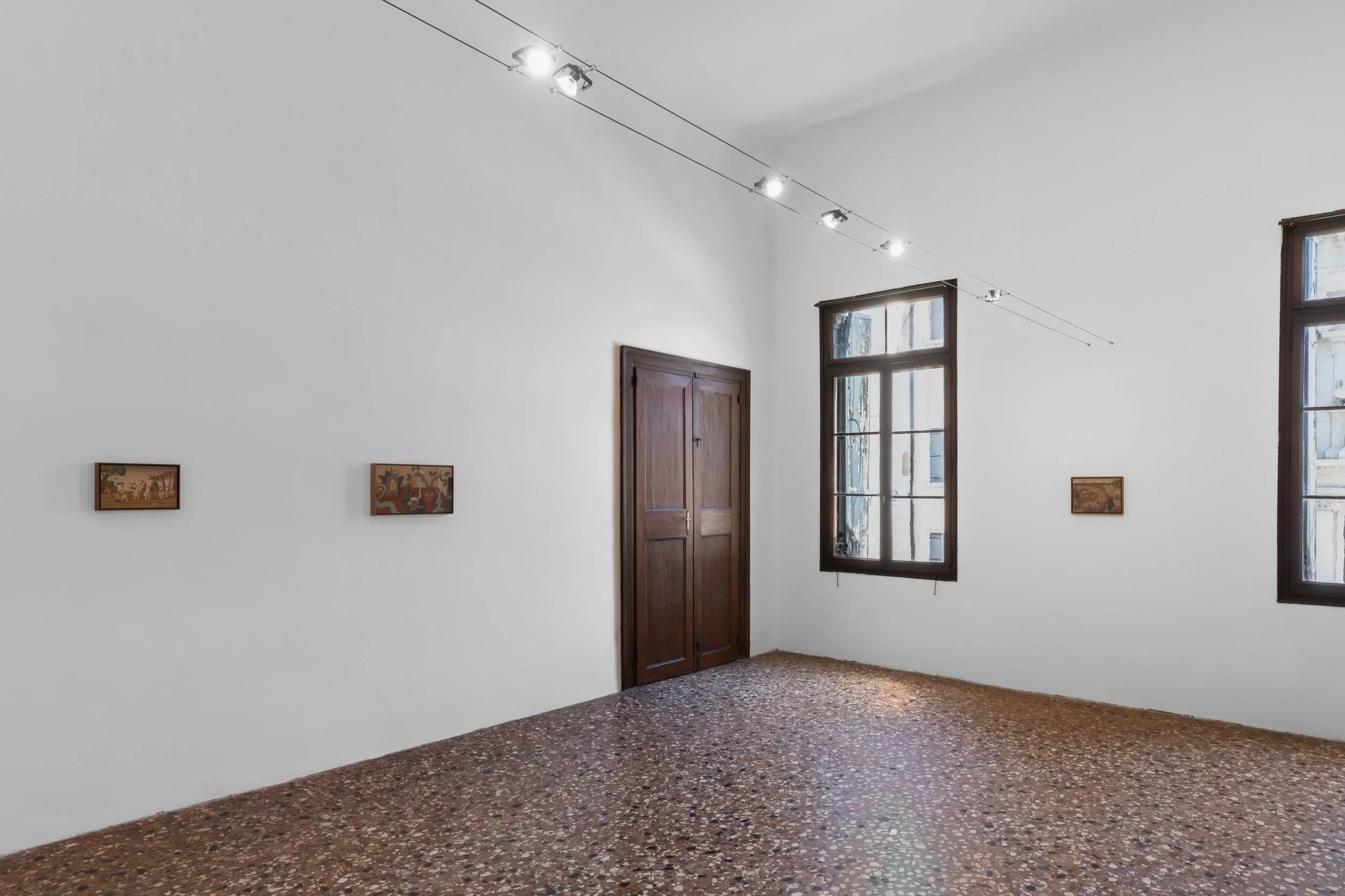
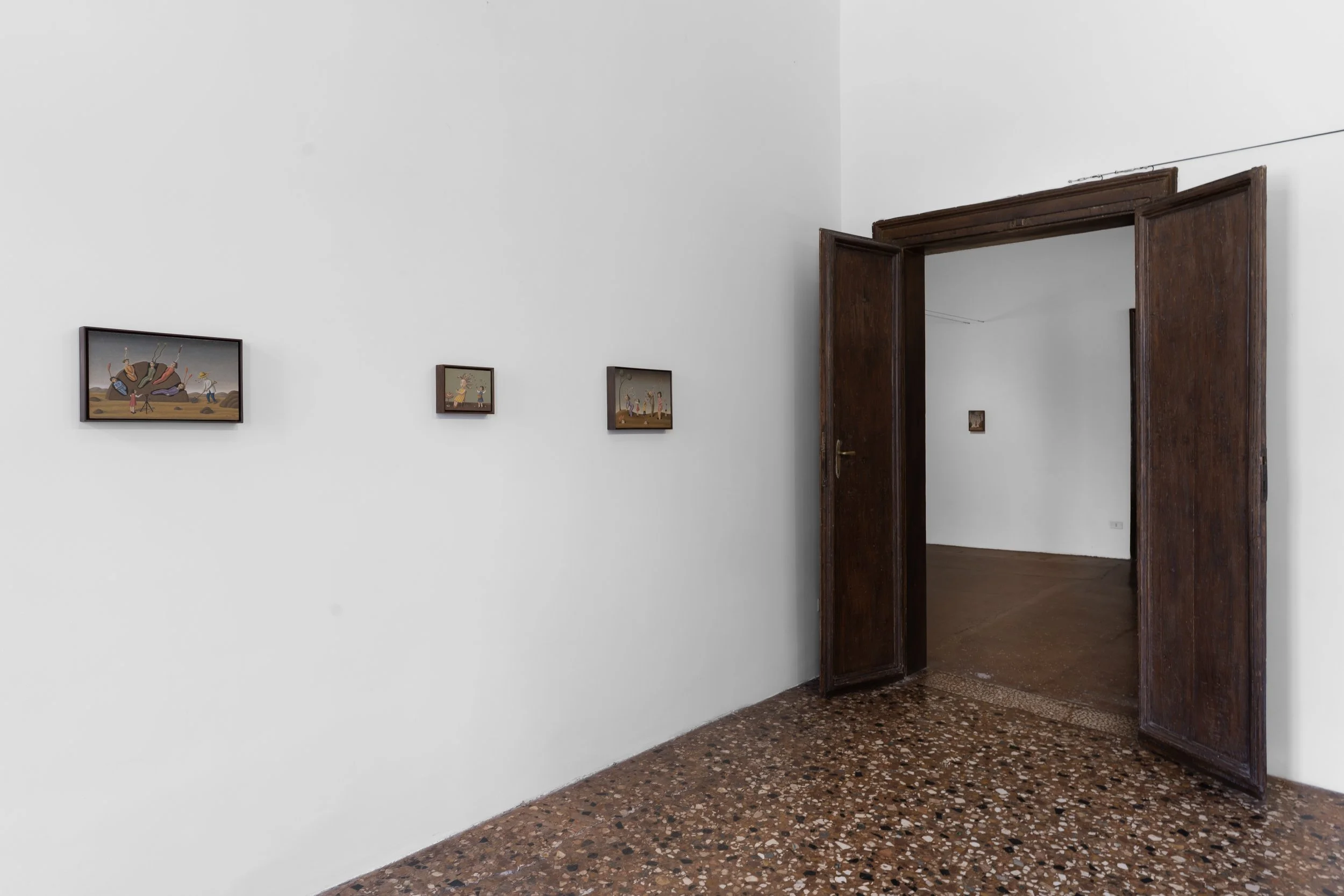
Otake’s engagement with the tarot began not as a practice of divination but as a grammar of form. The four works from his ongoing Mushroom Tarot series — Queen of Wands (2010), Six of Cups (2011), Nine of Wands (2014), and Eight of Wands (2017) — transpose the allegorical architecture of the traditional tarot deck into the artist’s mycological universe. Court figures and pip cards become inhabited by hybrid creatures and fungal forms, each small panel demanding the close attention one might give to an illuminated manuscript. In Queen of Wands, the sovereign figure presides over a world governed by spore and root rather than crown and sceptre — creative authority transposed into Otake’s “Fungitopia,” where power belongs to the organisms that outlast everything.
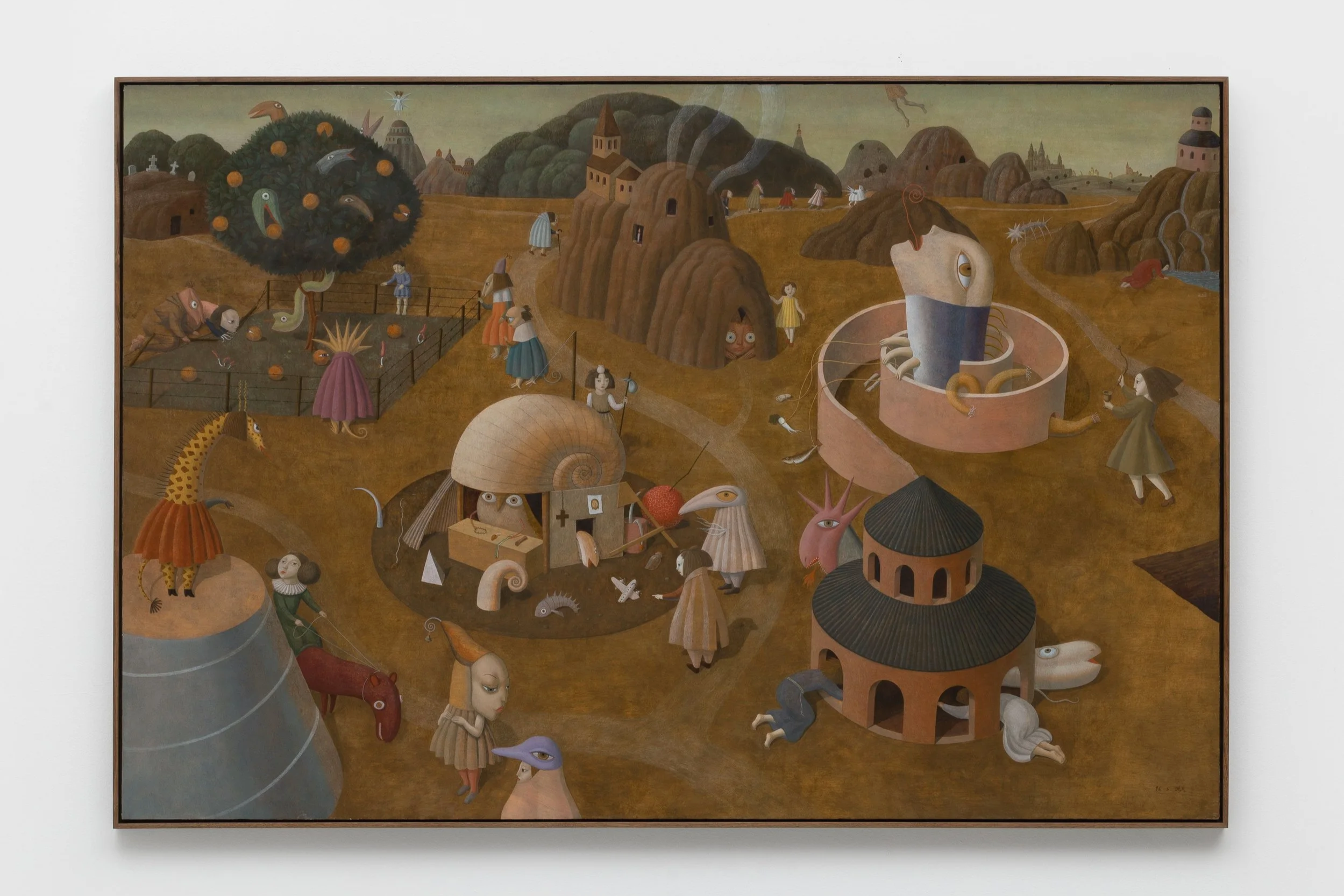
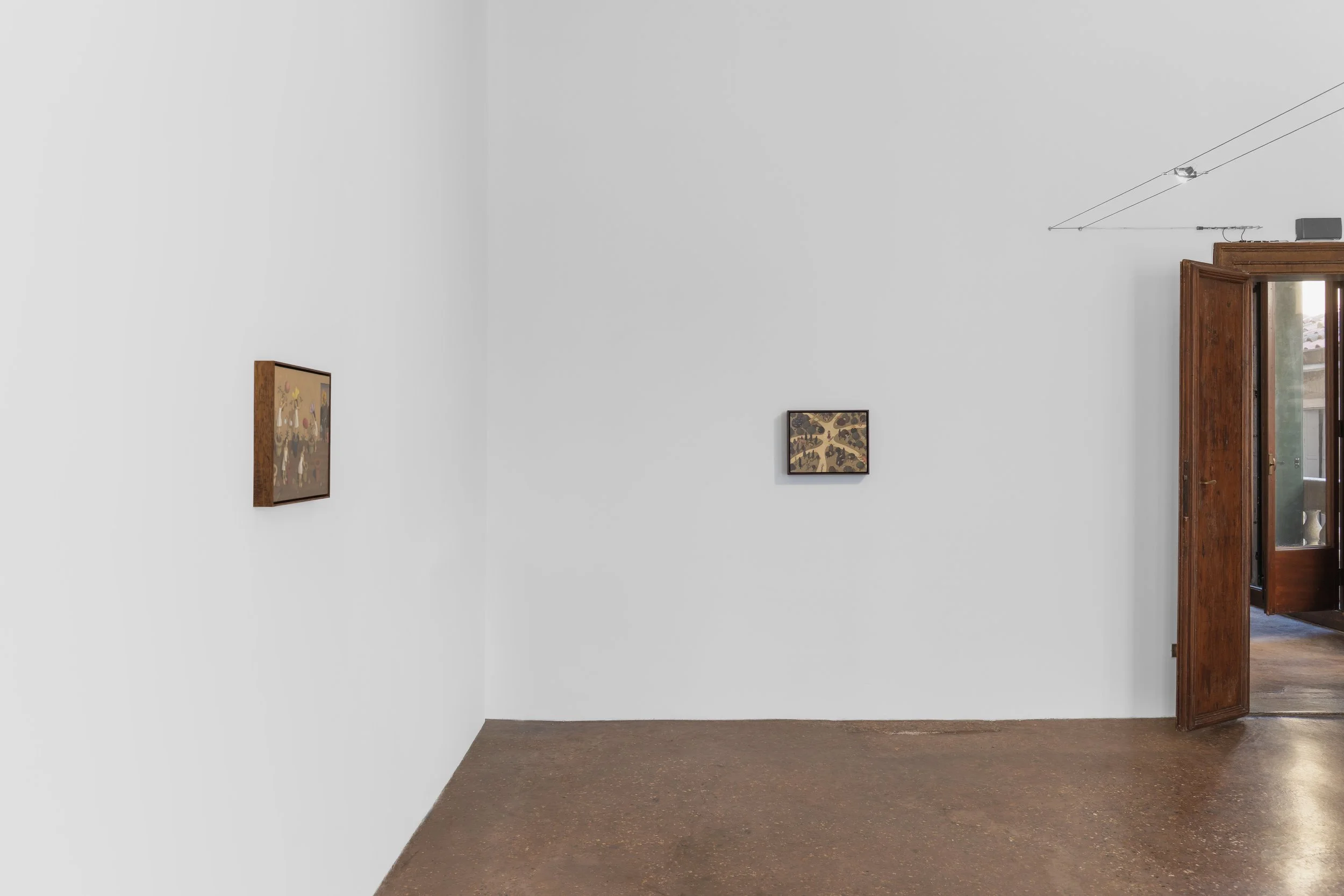
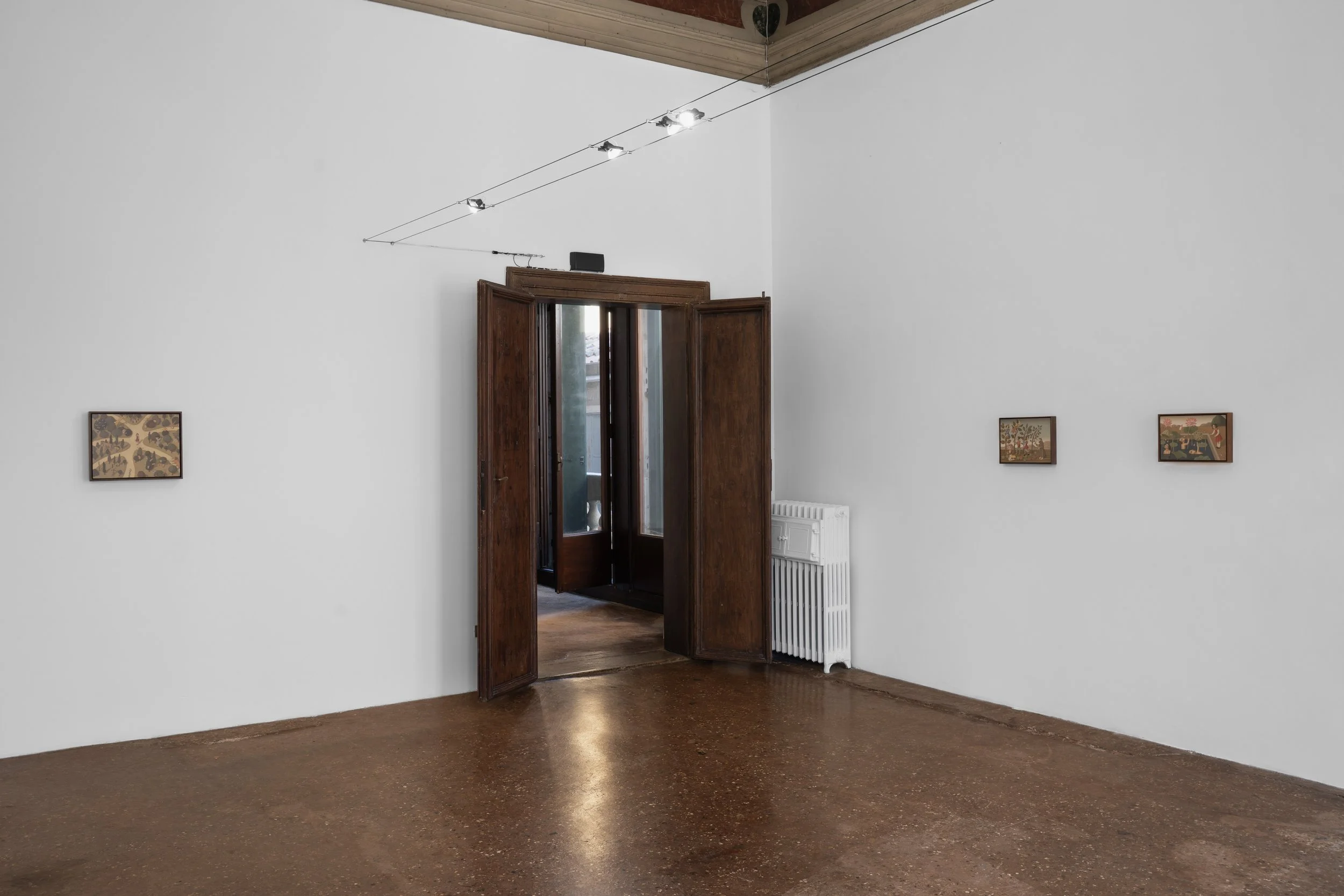
The room is anchored by Road to Santiago de Compostela (1996), the largest work in the exhibition. Santiago de Compostela became the destination of medieval pilgrims after, according to legend, the tomb of the apostle St. James was discovered there by a monk following stars in the Milky Way. In Otake’s painting, buildings along the pilgrimage route are magnified into powerful presences. The traditional emblem of the Camino, the scallop shell, is replaced by the spiral shell of a snail, long carrying the symbolic weight of soul and body, womb and grave. Travellers and strange creatures move across a starry field where arrival and transformation are indistinguishable. Snake Training (2025) extends this logic: a figure surrounded by a writhing alphabet of serpents rehearsing a negotiation between the human and the untameable that no pilgrim completes.
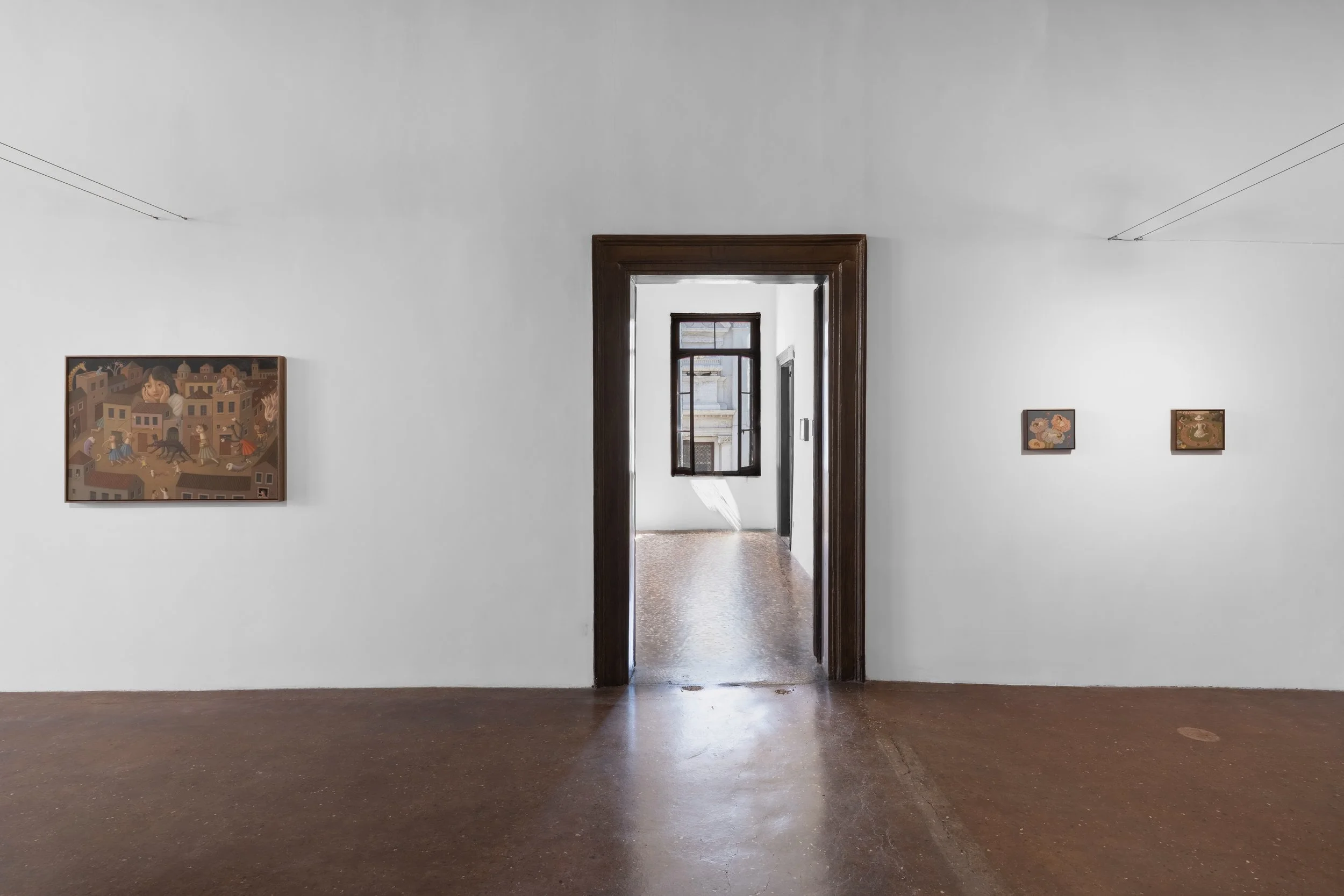
Don’t Make a Fuss in My Dream (2022) marks a different kind of reckoning. Painted after Otake’s return to Kobe following four decades in Kyoto, the work is shaped by the long aftermath of the 1995 Great Hanshin Earthquake, the disaster that destroyed the landscapes of his childhood. The dream is crowded with creatures and landmarks that Otake has spent five decades learning to see. Together, these works establish the exhibition’s deepest preoccupation: that every journey passes through a landscape already transforming beneath your feet.
Room Ⅱ. Gardening at the Edge of History
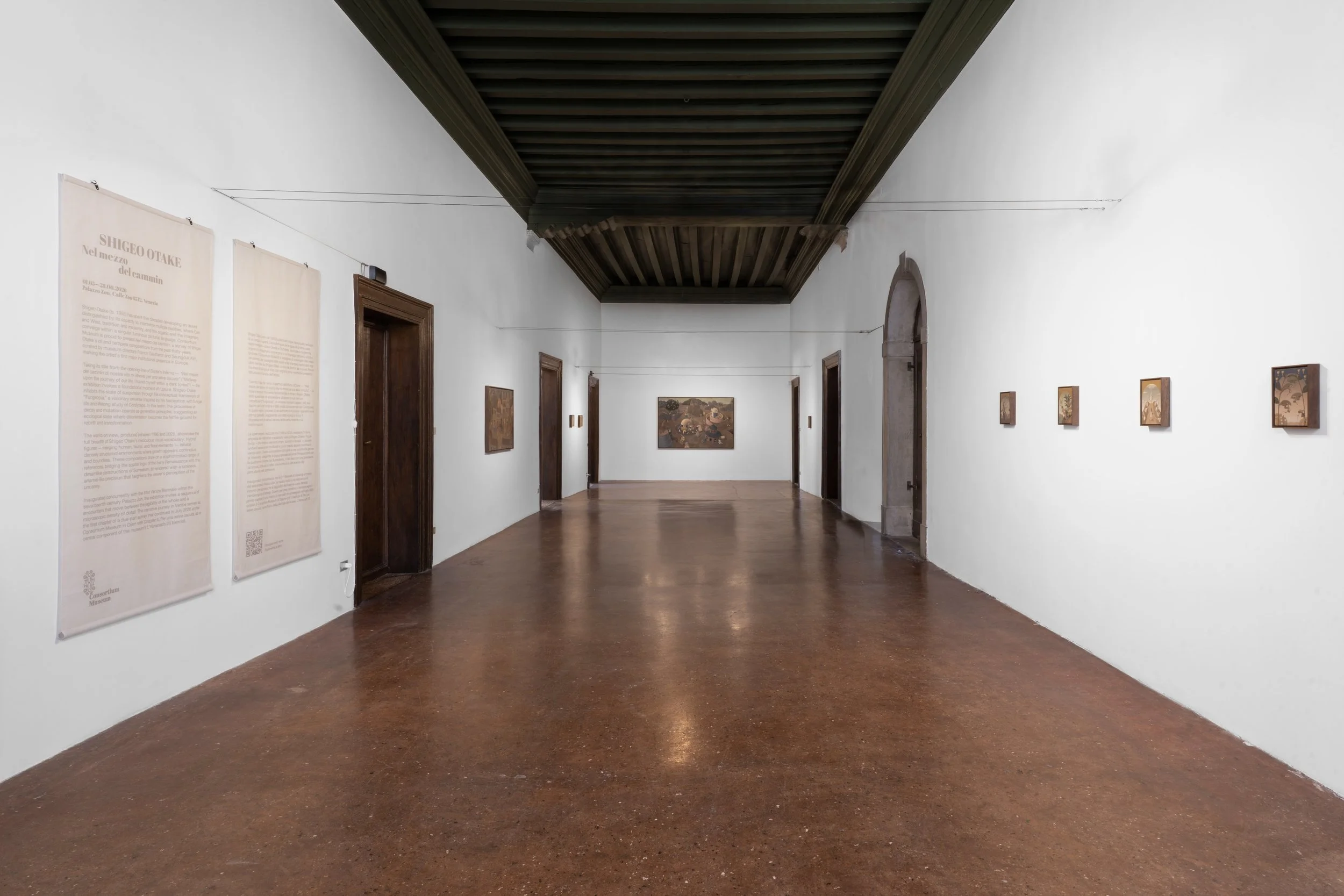
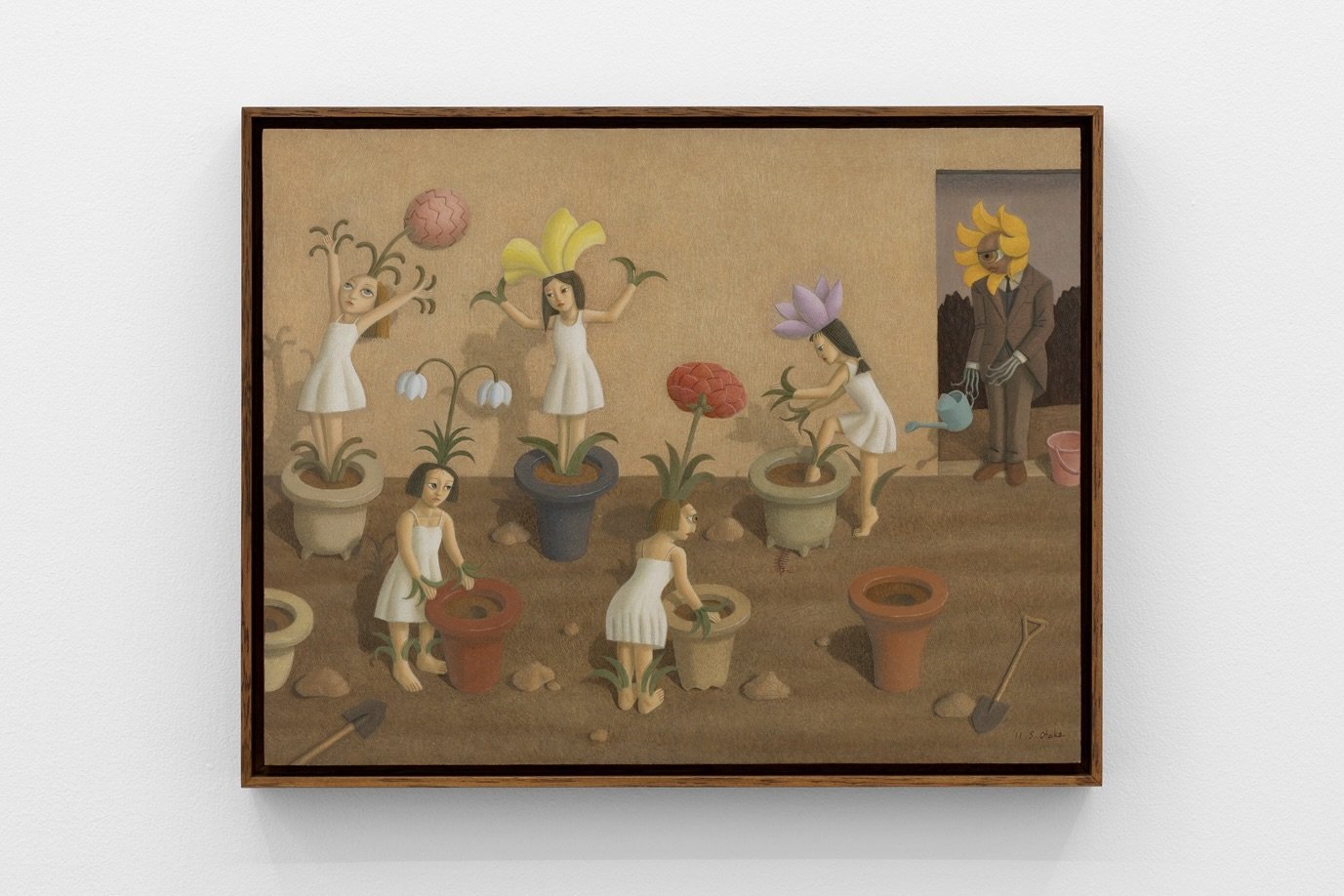
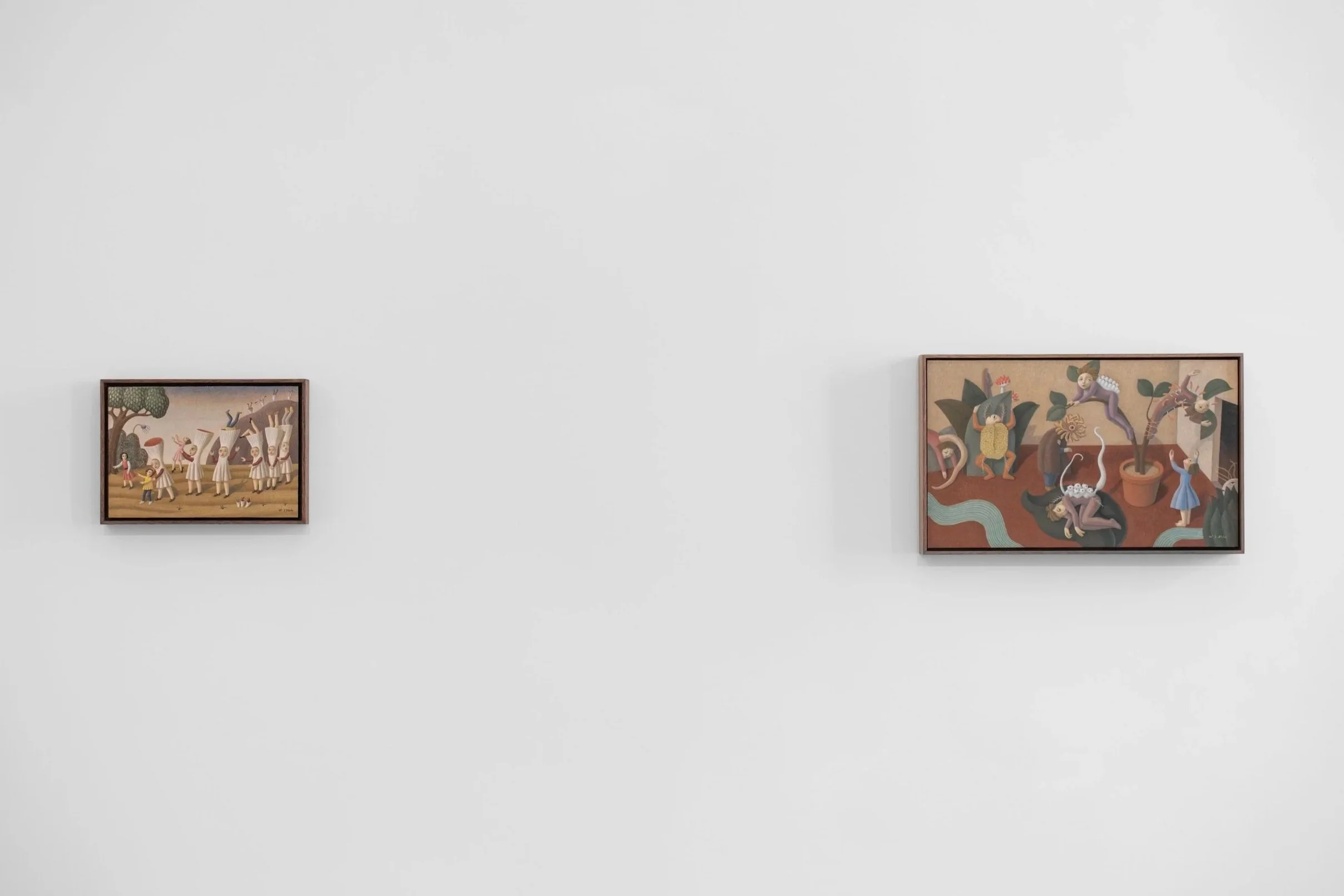
This room gathers works in which the natural world intrudes upon — or quietly devours — the structures humanity has built to contain it. Otake is a painter deeply versed in the history of Western art, from the spatial logic of the early Italian Renaissance to the dreamlike distortions of Surrealism, and this room makes that lineage visible. In Floral Costume (2011) and Hide and Seek (2016), figures adorned with botanical and fungal elements inhabit environments that feel simultaneously archaic and impossible — gardens that have grown beyond any gardener’s intention.
Saint Francis Driving Out the Pests (2024) pays explicit homage to Giotto’s fresco cycle in the Basilica of Assisi, in which the saint commands demons to leave a city. In Otake’s retelling, the demons are replaced by insects, fungi, and the teeming organisms of the natural world. The gesture of exorcism becomes ambiguous: are the creatures being expelled, or is the saint merely learning to coexist with forces older and more persistent than any human institution?
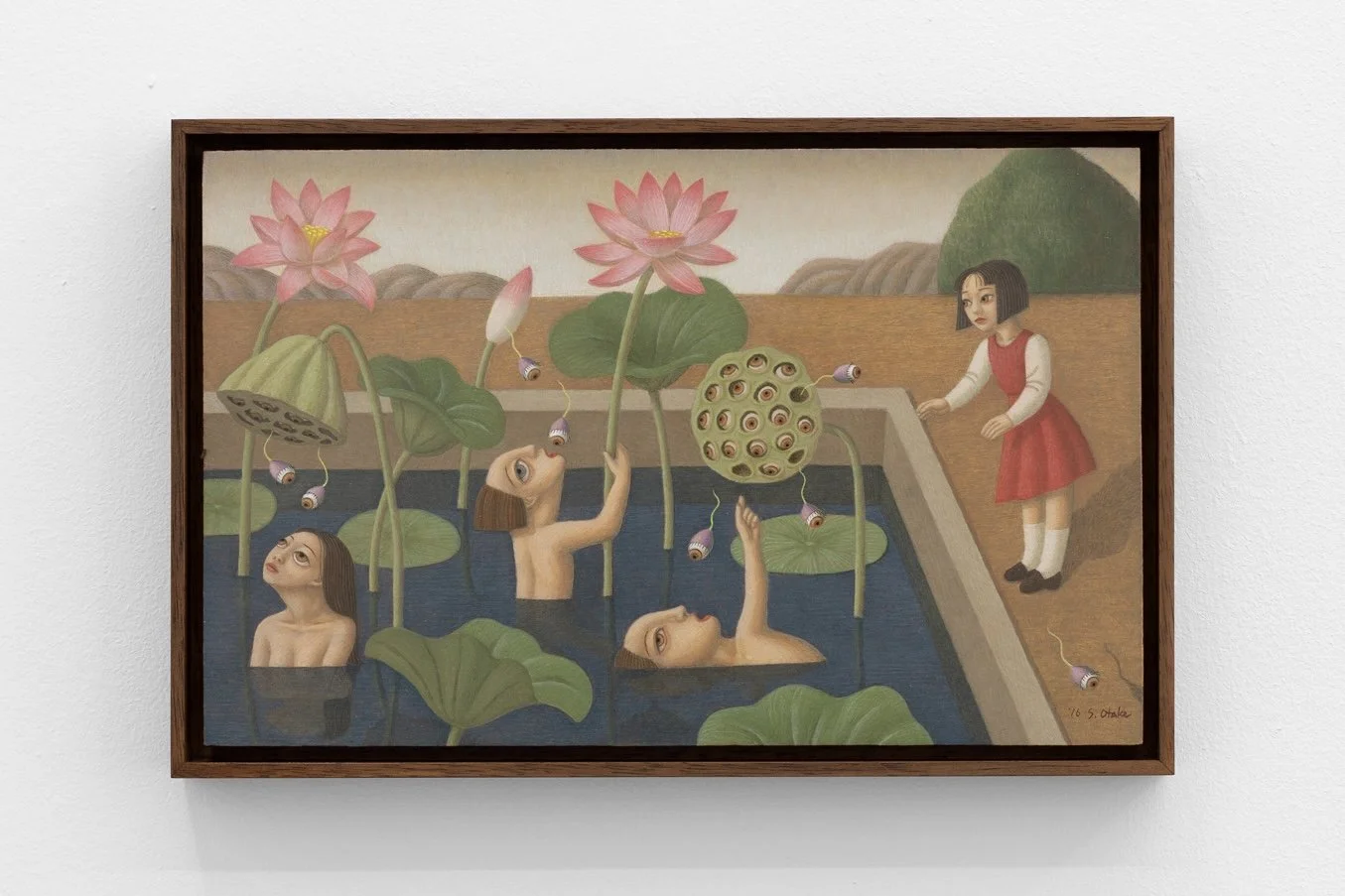
The room’s most quietly captivating work is Lotus Seed Eater (2016). A figure — part human, part botanical — consumes the seeds of a lotus, the ancient symbol of purity and rebirth across Buddhist and Egyptian traditions. The act is neither violent nor transcendent; it is simply ecological. Nourishment, decay, and regeneration fold into a single gesture, rendered with the luminous restraint that defines Otake’s technique. In this room, history is not a backdrop but a living organism — still growing, changing its form.
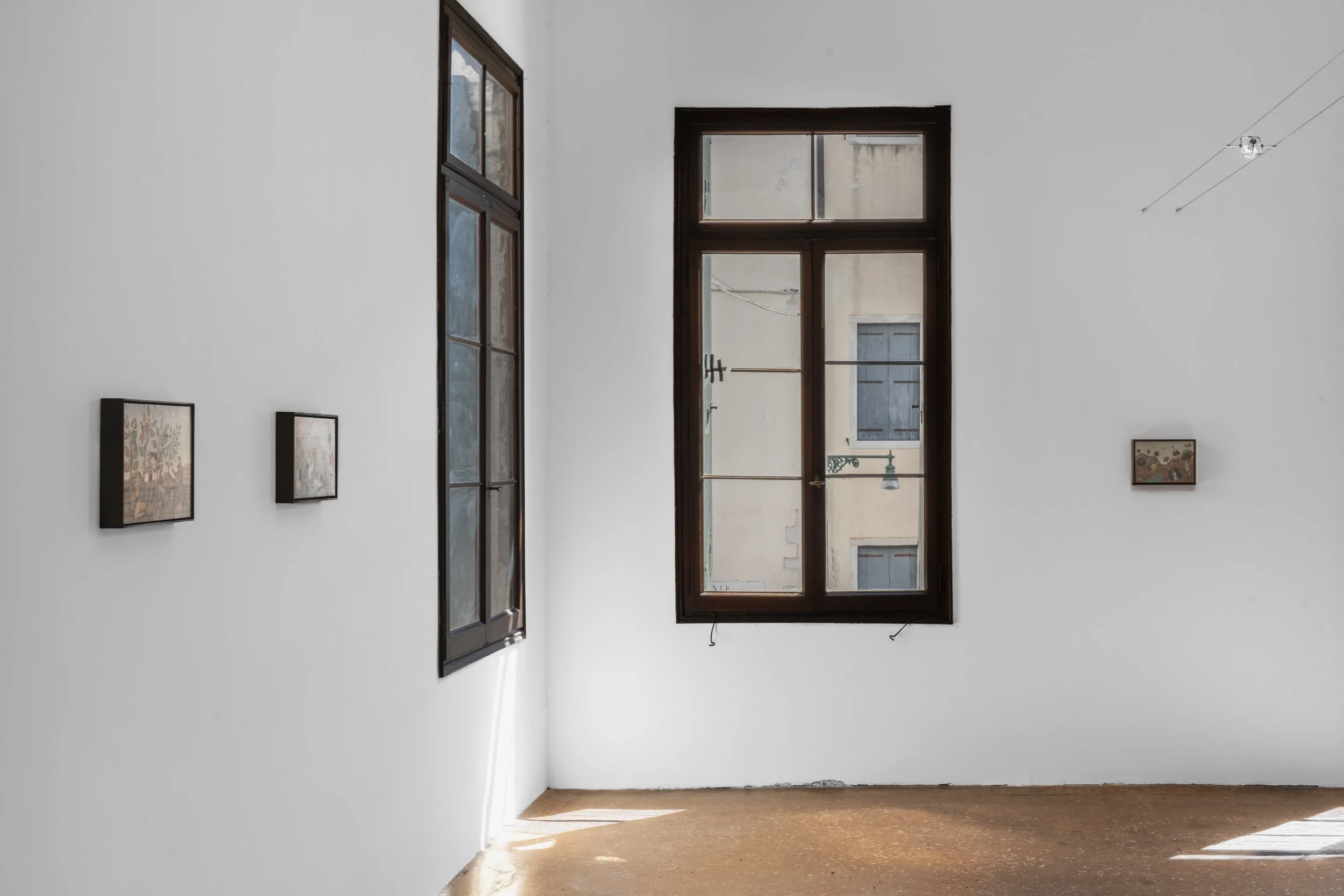
Room Ⅲ. The Cordyceps Notebooks
More than any other organism, the Cordyceps fungus has shaped Otake’s artistic imagination. Parasitic in nature, Cordyceps infects its host — whether an insect, spider, or caterpillar — and gradually commandeers its body before erupting through its exoskeleton in spectacular fruiting bodies. For Otake, this process is not horror but philosophy: a meditation on the porous boundary between self and other, on transformation as the fundamental condition of all living things.
The works in this room — Plum Grove (2021), Feeding (2023), Cross-Section Making and Spore Service (both 2025) — read like pages from a naturalist’s field journal in which the naturalist has become indistinguishable from the specimen. Figures engage in tasks that are at once mundane and profoundly strange: feeding, measuring, dispersing spores, tending to organisms that may already be tending to them in return.
The room’s centrepiece, Mr. Gomphus Floccosus (2024), takes its title from a species of mushroom long prized in East Asian cuisine but toxic when improperly prepared. In Otake’s painting, the mushroom becomes a protagonist — named, individuated, possessed of a particular dignity. The work encapsulates the artist’s vision of a world in which fungi are not backdrop or metaphor but citizens of an alternate civilisation, one that predates our own by hundreds of millions of years and may well outlast it. Painted with meticulous, almost devotional care, this small panel asks a large question: who, exactly, is studying whom?
Room Ⅳ. The Twelve Animals
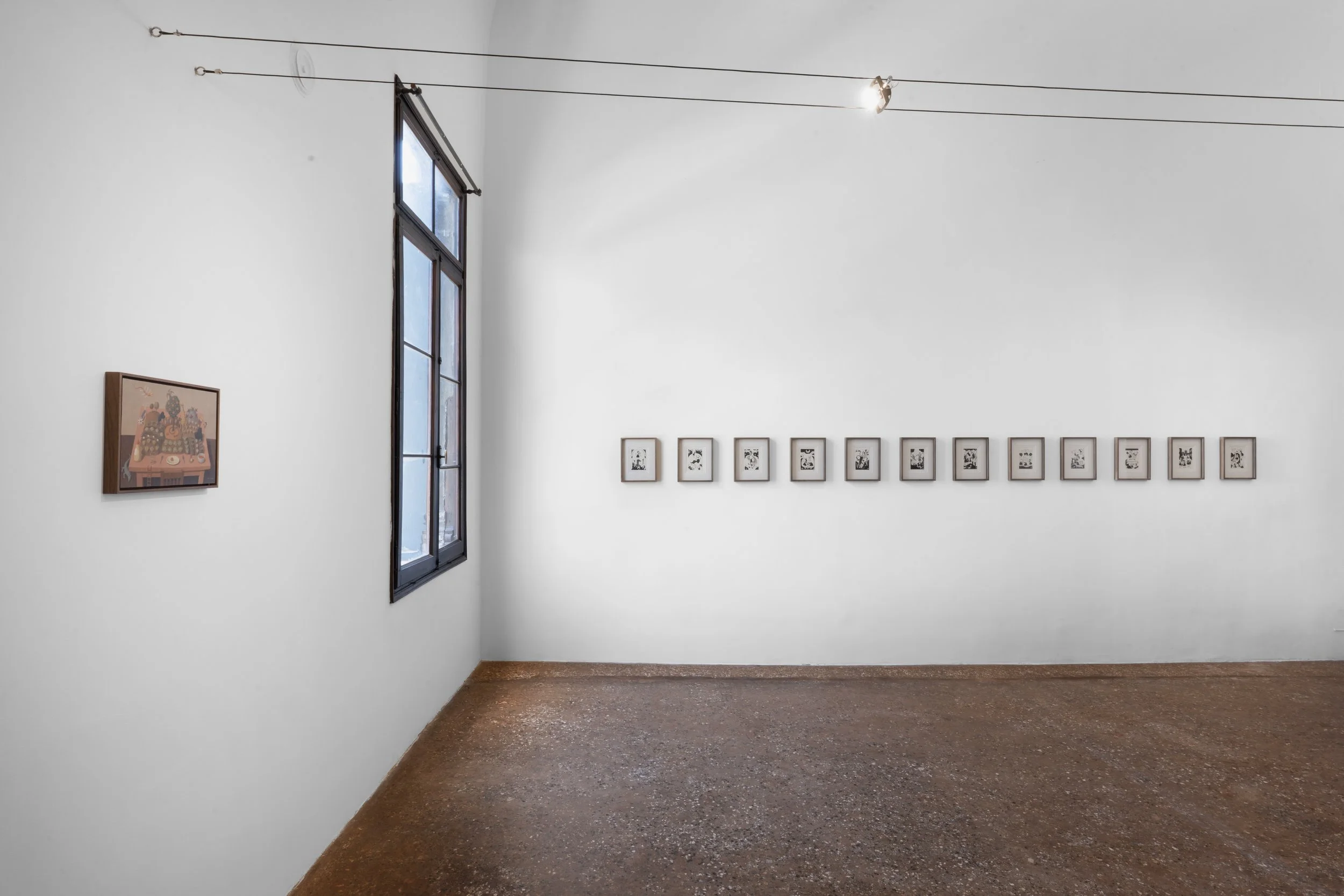
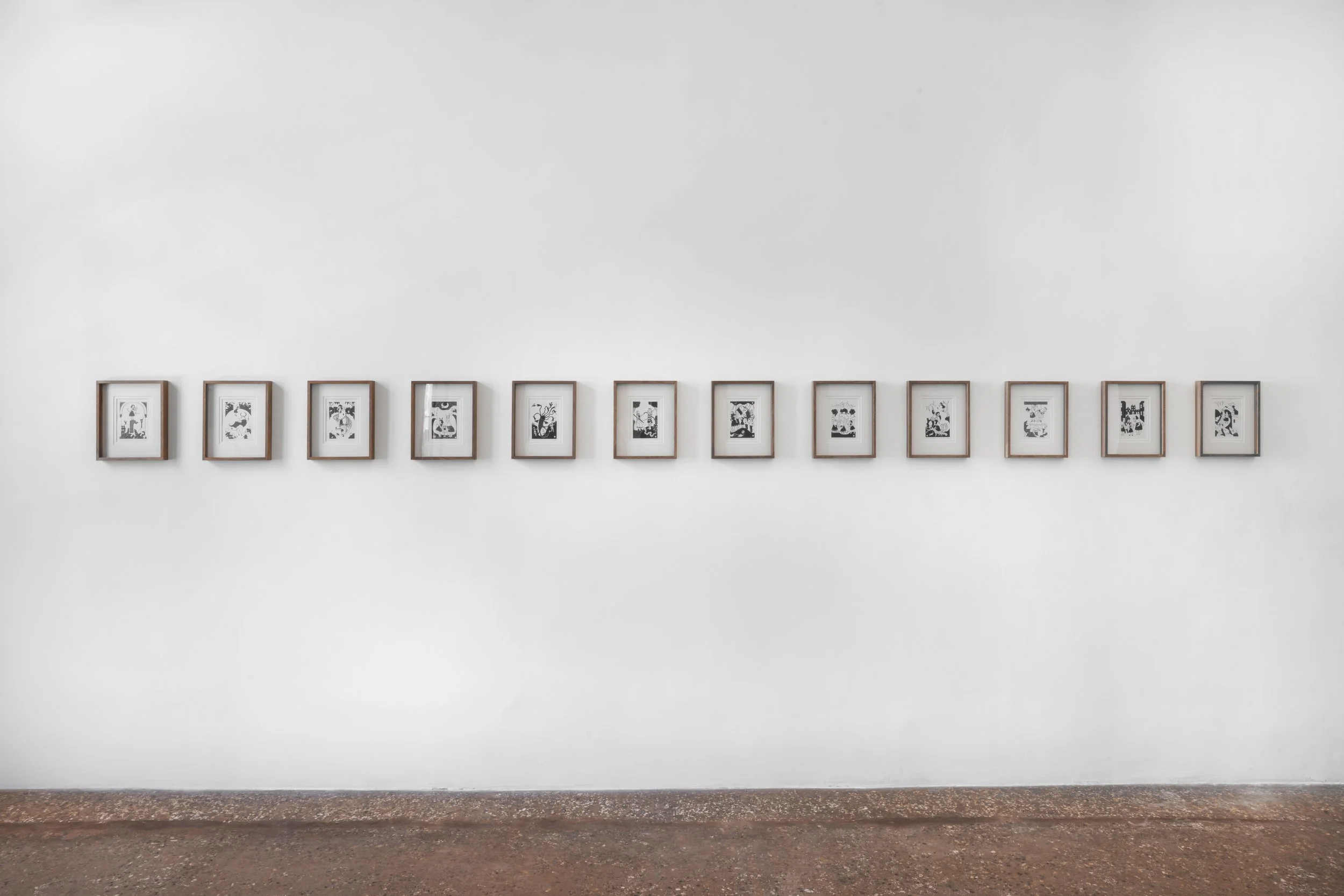
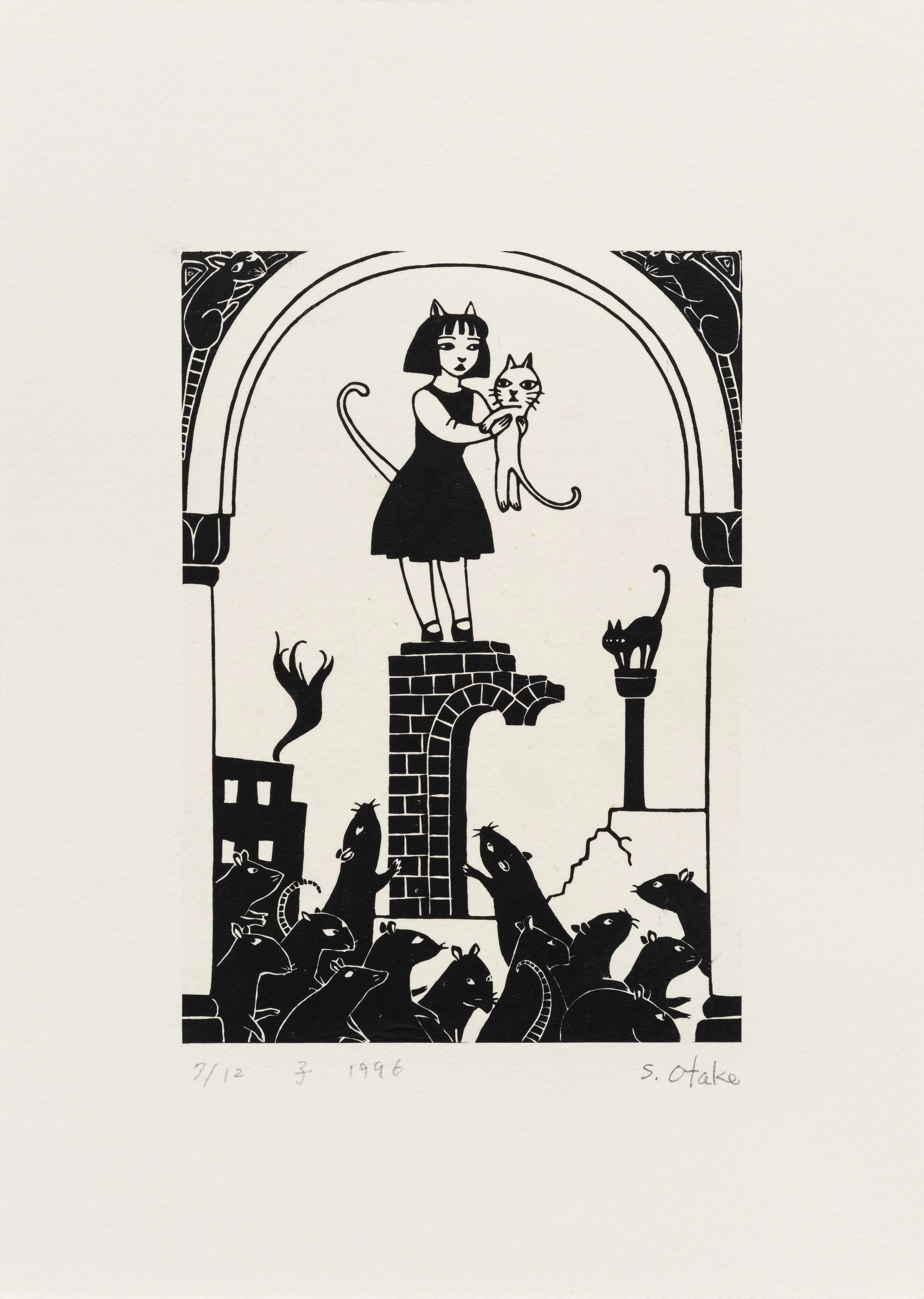
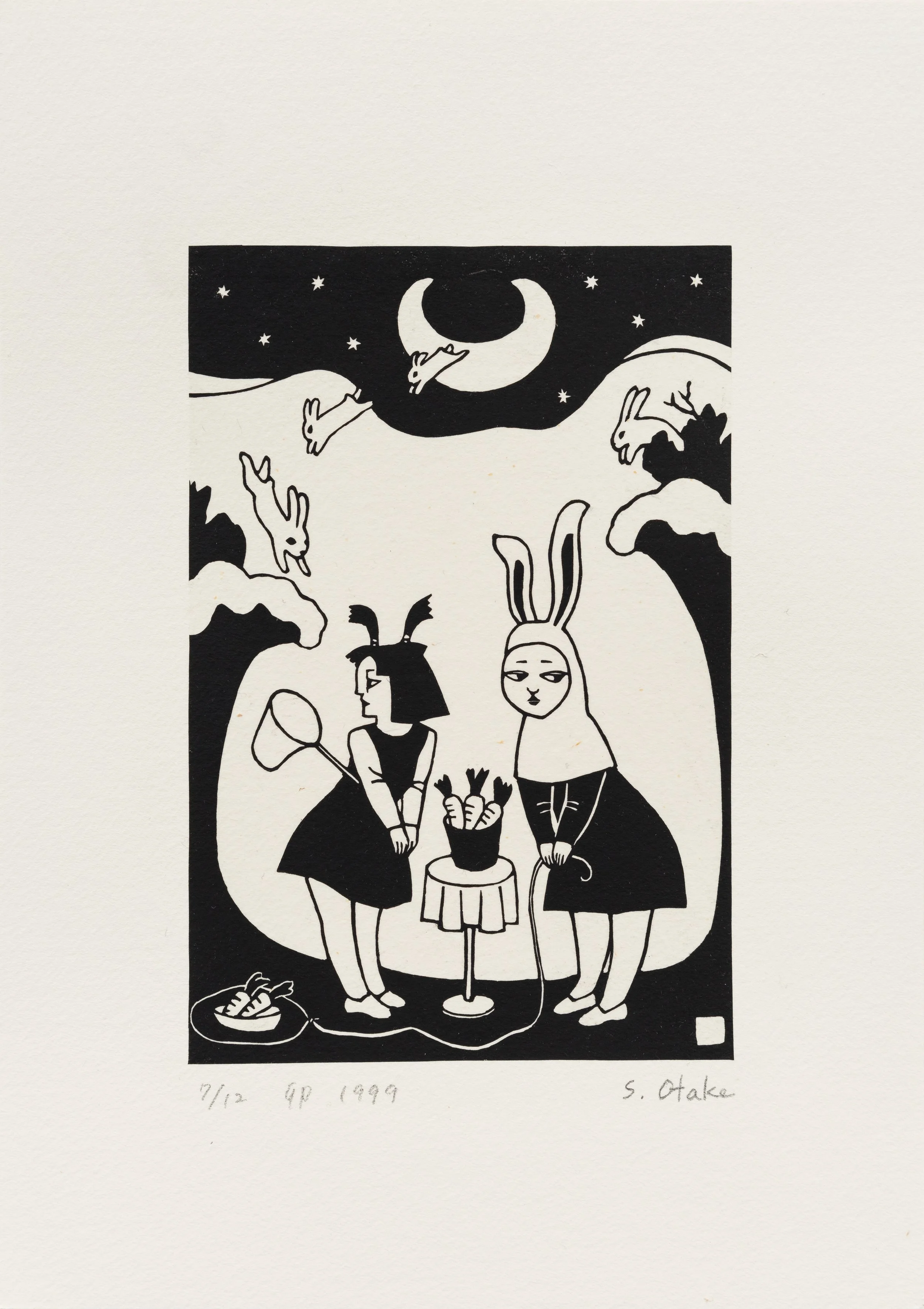
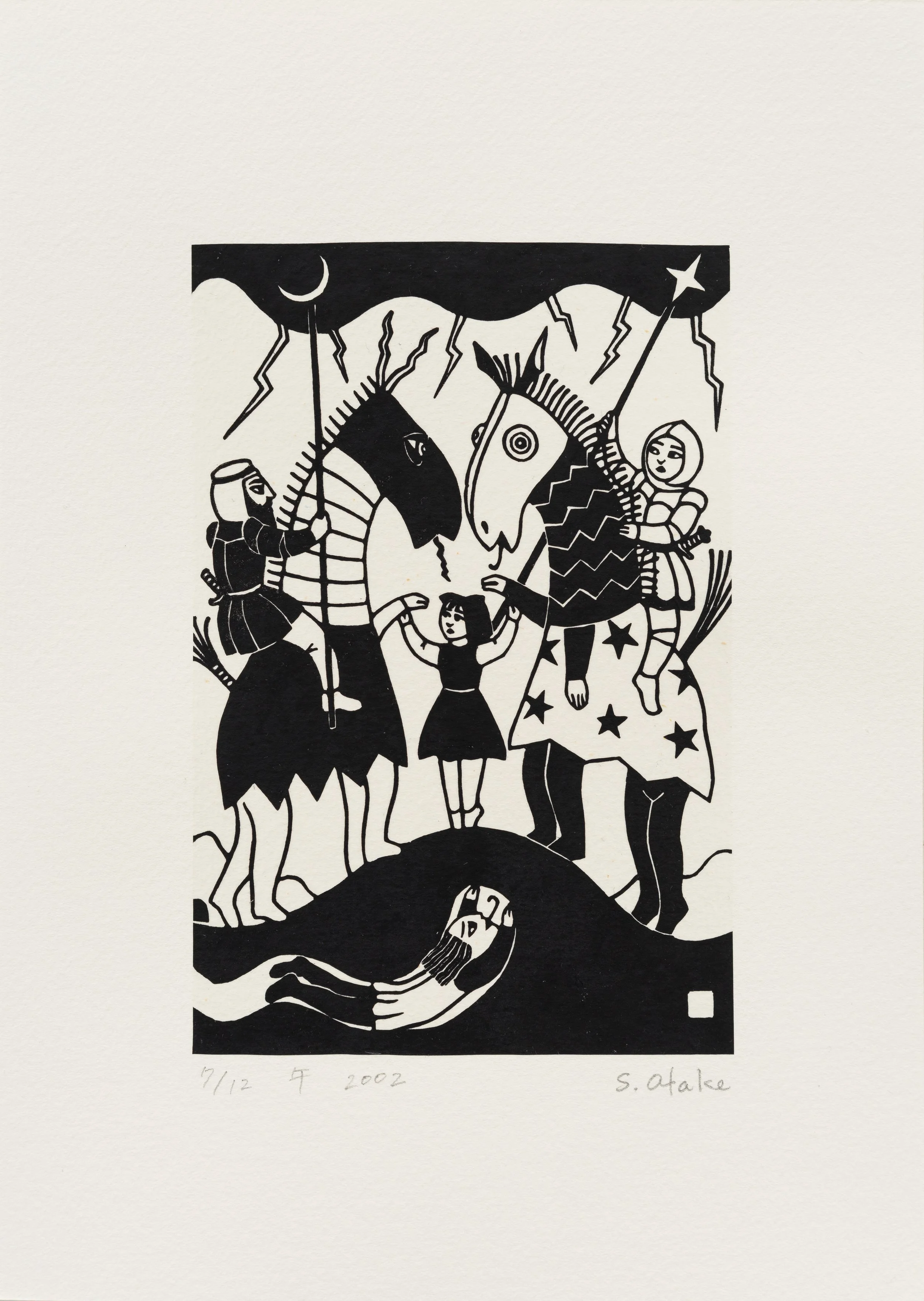
This final room presents a complete cycle: the twelve animals of the Chinese zodiac, rendered as linocuts on delicate gampi paper and produced by Otake between 1996 and 2007. Linocut is among the most demanding of the relief printing techniques: the image is carved in reverse into a linoleum block using gouges and chisels, a process that requires sustained precision and allows no correction once the blade has cut. Each block must then be inked and pressed by hand, and the labour of a single print can span days.
The series moves from Rat to Pig across a span of twelve years, each print carrying the quiet weight of a year’s observation and thought. Gampi, a Japanese paper prized for its translucency, tensile strength, and luminous surface, gives each image an almost ceremonial quality, as though these creatures have been committed to a material that will outlast any painted surface.
The Chinese zodiac assigns each year to an animal whose temperament is believed to shape all those born under its sign. Otake’s engagement with this system is neither folkloric nor ironic. The twelve prints constitute a single work — a cosmological calendar in which the creatures of myth and everyday life are granted equal standing. Rat, Ox, Tiger, Rabbit, Dragon, Snake, Horse, Goat, Monkey, Rooster, Dog, Pig: each appears as both familiar and strange, grounded in the iconographic traditions of East Asian art yet inflected by the same sensibility that animates his paintings — attentive, slightly unsettling, alive to the possibility that the animal kingdom is watching us as carefully as we are watching it.
Shown together, the twelve prints form a room-within-a-room, a contemplative counterpoint to the densely inhabited paintings elsewhere in the exhibition. Where the paintings teem and accumulate, the linocuts distil. They are an invitation to slow down, to complete the circuit of the year, and to leave the palazzo having passed through every season of Otake’s imagined world.